Particle Monitoring for HVAC Systems

Particle monitoring inside HVAC systems can provide valuable information on filter performance, air quality and changing operating conditions. However, measurements taken inside air ducts are exposed to pressure differences, high air velocities, humidity and non-uniform particle distributions that conventional indoor air quality sensors are not designed to manage.

Related products

READY-TO-INTEGRATE IN-DUCT MONITORING
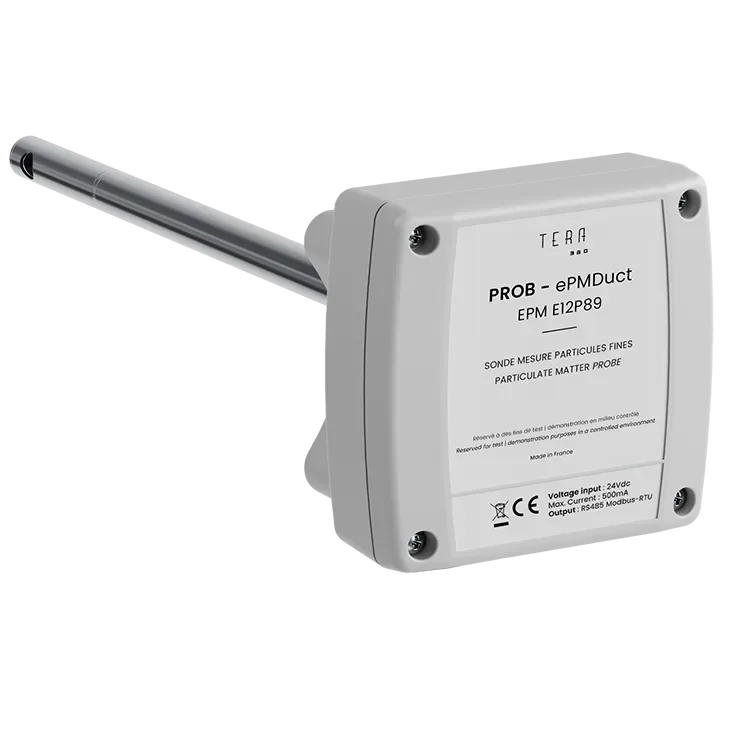
PMDUCT particulate matter sensor

PMDUCT

Continuous PM1, PM2.5 and PM10 monitoring directly inside ventilation, extraction and air-handling systems.

Explore PMDuct
OEM SENSOR FOR CONTROLLED SAMPLING
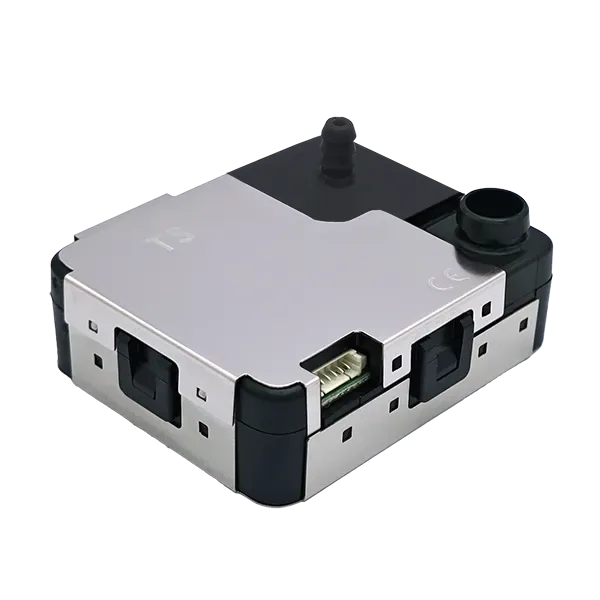
NextPM Advanced particulate matter sensor

NextPM Advanced

Designed for HVAC equipment requiring external pumping, controlled airflow or remote particle sampling.

Explore NextPM Advanced
COMPACT OEM IAQ INTEGRATION
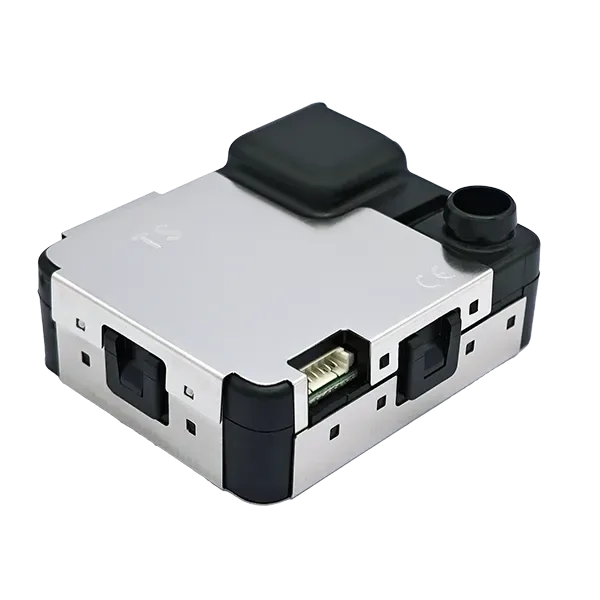
NextPM particulate matter sensor

NextPM

For particle monitoring in indoor air quality devices and HVAC equipment without demanding duct-pressure conditions.

Explore NextPM
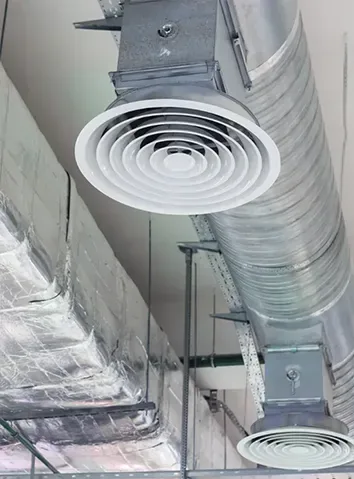
Ventilation duct and air diffuser in a building air-handling system
HVAC CONTEXT

Reliable particle data is essential to assess filtration and HVAC performance

Particle monitoring provides information that temperature, humidity, CO₂ and differential-pressure measurements cannot provide alone. It helps reveal how particle concentrations change across air-handling units, filtration stages and operating conditions.

Without continuous particle data, unexpected penetration, filter bypass or changes in filtration performance may remain undetected between inspections.

However, deploying conventional particle instruments across multiple air-handling units or duct branches is often too complex and expensive for continuous monitoring.

Filtration performance remains difficult to verify

Filter ratings describe standardized laboratory performance, but they do not continuously show how a filtration system performs under actual operating conditions.

Filter failures can remain undetected

Incorrect installation, bypass, damage or unexpected particle penetration may remain unnoticed between maintenance inspections.

HVAC control relies on incomplete information

Temperature, humidity, CO₂ and pressure are commonly monitored, while real-time particle levels often remain absent from building-management data.

Dense monitoring remains too expensive

Reference-grade instruments are difficult to deploy across multiple air-handling units, filtration stages or duct branches.

Measurement challenges in HVAC particle monitoring

HVAC ducts combine pressure differences, changing air velocity, humidity and complex sampling conditions that can make conventional compact PM sensors unreliable when directly installed inside the airflow.

Duct pressure affects sensor airflow

Many compact PM sensors use a small internal fan. Positive or negative duct pressure can change the airflow through the sensing chamber and directly affect the reported concentration.

The sample must be representative

Particle concentrations are not necessarily uniform across a duct, particularly near bends, junctions, dampers, filters or air-mixing sections. Sensor location and probe orientation therefore influence the result.

High air velocity can distort size distribution

When duct velocity and sampling velocity are not properly considered, larger and smaller particles may not enter the sampling system in representative proportions.

Humidity changes optical particle response

Outdoor-air intakes, cooling sections and changing HVAC conditions can expose sensors to high relative humidity. Hygroscopic particle growth and liquid droplets may then be interpreted as higher particulate mass.

Upstream and downstream measurements operate at different levels

The sensor upstream of a filter may be exposed to much higher concentrations than the downstream sensor. Reliable comparison requires sufficient sensitivity, compatible measurement ranges and stable sampling flow on both sides.

Long-term exposure increases contamination risk

Continuous duct monitoring exposes the sampling path and optical chamber to accumulated particles. Sensor architecture and operating mode therefore influence maintenance requirements and long-term stability.

Conventional compact PM sensors are generally designed for ambient-air sampling. Reliable in-duct measurement therefore requires an architecture adapted to airflow and pressure conditions.

SOLUTION ARCHITECTURE

Controlled sampling with NextPM Advanced

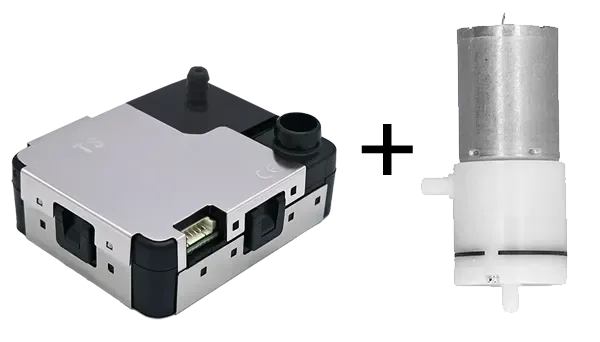
NextPM Advanced keeps the same optical measurement principles as NextPM — dual-angle detection, humidity management and particle-size information — but replaces the internal fan with an external pump. This allows the sampling flow through the sensing element to be controlled independently from the main duct airflow and therefore better adapted to HVAC and other duct applications.

1 NextPM Advanced sensor with its external sampling pump
1
External pump

Controlled sampling flow.

2
Up to 10,000 µg/m³

For higher-concentration applications.

3
Same NextPM sensing principles

Dual-angle detection + humidity management.

Explore NextPM Advanced

OUR SOLUTIONS

TERA solutions designed around HVAC sampling constraints

Each architecture answers a different sampling constraint: a ready-to-install probe, a controlled-sampling sensor for equipment manufacturers, or a compact sensor for devices that are not exposed to duct pressure.

PMDUCT particulate matter sensor
Ready to install in a duct

PMDUCT

PMDuct combines a protected sampling architecture, active pumping and an integrated NextPM Advanced sensor to monitor PM1, PM2.5 and PM10 directly inside HVAC ducts and air-handling units.

  • Internal pumping system
  • Sampling flow of 2.5 L/min
  • Operates under the velocities and pressures found in ducts
  • Range up to 10,000 µg/m³
  • Mass and number concentration
  • Temperature and relative humidity
  • Modbus RTU / RS485 for BMS or PLC integration
  • Ready-to-install mechanical assembly
Explore PMDuct
NextPM Advanced particulate matter sensor
For HVAC equipment manufacturers

NextPM Advanced

NextPM Advanced replaces the internal fan with an external pumping architecture, enabling OEMs to control airflow and design a sampling path adapted to duct pressure, remote sampling and equipment geometry.

  • External pump
  • Controlled sampling flow
  • Better control over pressure differences
  • Remote sampling possible
  • Extended range up to 10,000 µg/m³
  • PM1, PM2.5, PM10 and five particle-size channels
  • OEM integration
  • Calibration adapted to the application
Explore NextPM Advanced
NextPM particulate matter sensor
For IAQ devices and terminal units

NextPM

NextPM provides compact PM1, PM2.5 and PM10 measurement for indoor air quality devices and HVAC equipment where the sensor is not directly exposed to demanding duct-pressure conditions.

  • Compact format
  • Patented heater keeping internal humidity under control
  • Coarse-particle trap
  • PM1, PM2.5, PM10 and five channels
  • Low maintenance requirement
  • OEM integration
Explore NextPM

From invisible particle variations to actionable HVAC data

Each of these answers one of the blind spots described at the top of the page.

Verify filtration performance under actual conditions

Compare particle levels before and after filtration to identify changes in penetration and evaluate performance over time.

Detect abnormal particle penetration earlier

Identify unexpected downstream increases that may indicate filter damage, bypass, incorrect installation or changing operating conditions.

Add particle data to the BMS

Integrate PM1, PM2.5 and PM10 measurements into building-management or equipment-control systems through Modbus RS485.

Deploy more measurement points

Monitor multiple air-handling units, duct branches or filtration stages with a more cost-effective sensing architecture.

Support data-driven maintenance

Combine particle trends with pressure, airflow and operating data to improve maintenance decisions.

Evaluate HVAC adjustments

Compare particle conditions before and after a filter, airflow or ventilation change to verify the effect of the intervention.

Support smarter system operation

Particle data can provide an additional input for filtration and ventilation strategies when integrated into a validated control architecture.

Building regulations and smart-building frameworks increasingly encourage indoor-air-quality monitoring and control. Particle measurements can contribute to these systems, but the applicable requirements depend on the building, country and intended use.

ENGINEERING SUPPORT

Designing an HVAC monitoring system?

Reliable in-duct monitoring depends on more than sensor selection. Duct pressure, sampling location, probe geometry, airflow, tubing, communication and maintenance strategy all influence the final measurement.

TERA Sensor can support the definition of the sampling architecture, sensor integration, calibration strategy and prototype. TERA Tronics can then support electronics, industrialization and series manufacturing.

  • TERA Sensor: particle measurement, sensor selection, sampling architecture, integration and calibration.
  • TERA Tronics: electronics, prototyping, industrialization and series manufacturing.
Measurement need
Architecture TERA Sensor
Integration TERA Sensor
Prototype TERA Sensor + TERA Tronics
Production TERA Sensor + TERA Tronics

FAQ

Most compact indoor sensors draw their sample with a small internal fan, sized for still room air. Inside a duct, positive or negative pressure and high air velocity can change the flow through the sensing chamber, and therefore the concentration reported. Duct measurement is a fluidic problem as much as an optical one, which is why the sampling architecture has to be designed together with the sensor.

Pressure differences between the duct and the measurement path can modify the airflow through a fan-based sensing architecture. Since an optical sensor reports what actually passes through its chamber, a change in that flow translates directly into a change in the reported concentration, and can also shift the conditions under which the sensor was calibrated.

Particle concentrations are not necessarily uniform across a duct section, particularly close to bends, junctions, dampers, filters or mixing sections. Sampling position and probe orientation therefore influence the result. Straight duct runs and sufficient mixing distance downstream of a filtration stage generally give more representative measurements.

PMDuct measures particle concentrations upstream and downstream of a filtration stage, which allows penetration to be tracked under actual operating conditions. This is complementary information, not a filter classification: efficiency ratings such as ePM1, ePM2.5 and ePM10 are established under standardized laboratory conditions and cannot be reproduced by in-duct monitoring.

NextPM Advanced is a controlled-sampling sensor intended for manufacturers designing their own probe, fluidic path and enclosure. PMDuct integrates NextPM Advanced into a complete, ready-to-install probe with its own pumping architecture, mechanical protection and Modbus RS485 communication.

Outdoor-air intakes, cooling sections and changing operating conditions can expose a sensor to high relative humidity. Hygroscopic particles grow as they absorb water, and liquid droplets may be counted as particulate mass. NextPM manages internal humidity actively, and sensor response to temperature and humidity should be evaluated for the conditions of the intended installation.

Particle monitoring can reveal abnormal penetration, bypass or loss of filtration performance. Filter loading and clogging should normally be assessed using differential pressure and airflow data. Combining these parameters provides a more complete view of filter condition.

Yes. PMDuct communicates over Modbus RTU / RS485 and is designed for integration into building-management, SCADA or equipment-control systems, alongside the temperature, humidity, pressure and airflow data already collected.