Industrial processes can generate rapidly changing particle concentrations that are difficult to characterize with isolated measurements alone. Continuous monitoring helps identify when and where particle concentrations change, supporting process optimization, contamination control, ventilation management and regulatory compliance.

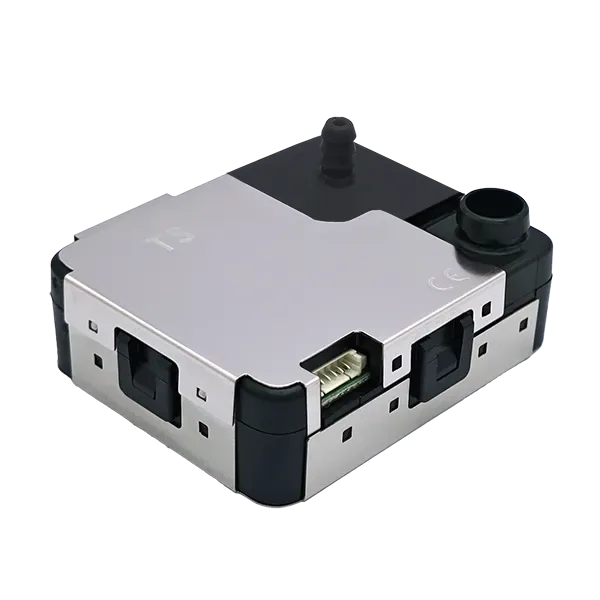
For industrial applications requiring controlled sampling, external pumping or high particle concentrations.
Explore NextPM Advanced
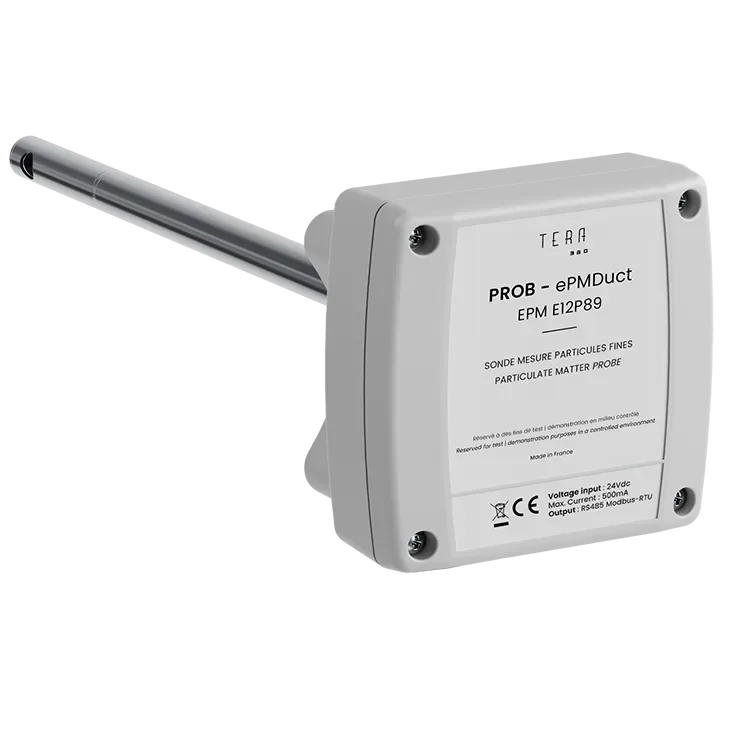
For continuous particle monitoring directly inside ventilation, extraction and filtration systems.
Explore PMDuct
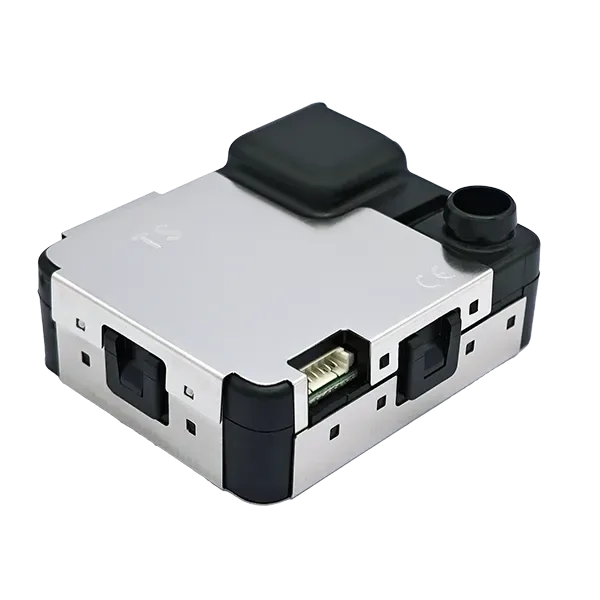
Compact PM1, PM2.5 and PM10 sensing for integration into industrial equipment and distributed monitoring networks.
Explore NextPM
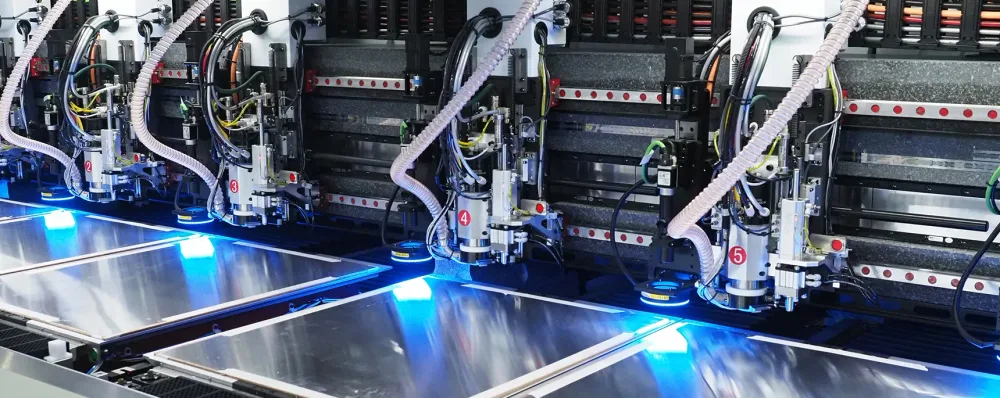
Particle control in industrial environments is not only a compliance issue. Variations in particle concentrations can reveal process drift, inadequate extraction, equipment wear, contamination events or changing production conditions.
Isolated measurements provide only a limited view of these variations. Without continuous data, particle-related problems may remain undetected until they affect product quality, production continuity, energy consumption or compliance documentation.
Particle concentrations may change before conventional process controls reveal a production anomaly.
Poorly characterized emissions can contribute to rejects, contamination events and costly production interruptions.
Without real-time particle data, ventilation and extraction systems are often operated conservatively rather than according to actual conditions.
Isolated measurements provide limited evidence of variations, incidents and long-term operating conditions.
Industrial environments combine wide concentration ranges, changing aerosol properties and complex sampling conditions. Selecting an effective monitoring architecture requires more than choosing a sensor specification.
Industrial processes can generate concentrations well above typical ambient-air levels.
Particle size, density, shape and optical properties vary according to materials and processes.
Industrial aerosols can contain both fine and coarse fractions.
Continuous exposure to dusty environments can progressively affect optical and airflow components.
Sampling position, air velocity, tubing and enclosure design influence which particles reach the sensing element.
A calibration developed with a standard aerosol may not fully represent the material or process being monitored.
TERA Sensor products use different sensing and sampling architectures to address several of these constraints depending on the industrial application.
Different industrial applications require different sampling conditions, concentration ranges and integration architectures.
Compact OEM integration for distributed particle monitoring across industrial equipment or multiple measurement locations.
External or controlled sampling architecture for applications requiring extended concentration ranges, remote sampling or higher particle concentrations.
Integrated monitoring for ventilation, extraction and filtration systems where direct in-duct measurement is required.
Performance data, calibration options and technical documentation are available for each sensing architecture. Selection should be based on the concentration range, sampling conditions, aerosol characteristics and integration requirements of the application.
Continuous particle monitoring transforms concentration data into information that can support production control, maintenance, filtration management and corrective actions.
Identify unusual particle variations before they develop into quality issues, production losses or contamination events.
Compare particle concentrations across production phases, equipment configurations or operating conditions.
Relate concentration peaks to specific processes, production steps, maintenance operations or equipment.
Evaluate extraction and filtration performance and support ventilation strategies based on actual particle conditions.
Compare conditions before and after a process, filtration or ventilation change to verify its effectiveness.
Build a continuous record of particle variations, operating conditions and relevant production events.
Sensor performance is only one part of the final monitoring system. Sampling architecture, airflow design, electronics, communication, firmware, calibration strategy and long-term maintenance can all influence the quality of the data produced by the final device.
TERA Sensor supports sensor selection, sampling architecture, mechanical and electronic integration, firmware and prototype development. Through TERA Tronics, projects can also be supported through industrialization, electronic manufacturing and series production.
Continuous monitoring adds the temporal information needed to identify when concentration changes occur and correlate them with specific machines, tasks or production phases, which isolated or time-integrated measurements cannot provide.
No. Reference sampling and laboratory methods remain necessary when measurements must demonstrate regulatory compliance or characterize occupational exposure according to the applicable methodology. Continuous optical monitoring answers a different question — when and under which conditions concentrations change.
Optical sensors respond to particle size, shape, density and refractive index. Industrial aerosols generated by different materials and processes can vary significantly in these properties, which affects the optical response and the calibration required.
A calibration developed with a standard aerosol may not fully represent the material or process being monitored. Application-specific calibration or verification is generally required to obtain quantitative results representative of the actual process aerosol.
Yes. Comparing concentrations before and after filtration, local exhaust ventilation or other engineering controls can help evaluate their effectiveness and detect performance degradation over time.
Yes. Comparing particle concentrations with ventilation, extraction or filtration settings can help determine whether these systems are operating at a level proportionate to actual process conditions, rather than being run with conservative margins by default.
Grinding, cutting, powder handling or process failures can generate concentrations well above typical ambient-air levels. Sensor architecture, sampling design and concentration range need to be adapted to these conditions to maintain measurement quality.
Sampling position, air velocity, tubing and enclosure design influence which particles actually reach the sensing element. Sensor and sampling-point placement should reflect the process zones and events that need to be monitored.
NextPM is the compact OEM sensor, intended for integration into industrial equipment and distributed monitoring networks. NextPM Advanced uses an external pump and a controlled sampling architecture, for remote sampling or concentrations above the range of a compact sensor. PMDuct is the integrated instrument for ventilation, extraction and filtration systems, where measurement takes place directly inside the duct and communicates over Modbus RS485.
Yes. NextPM Advanced is designed for external sampling and controlled airflow architectures, and TERA Sensor supports customers on sampling design, electronics, firmware and calibration strategy for equipment-level integration.