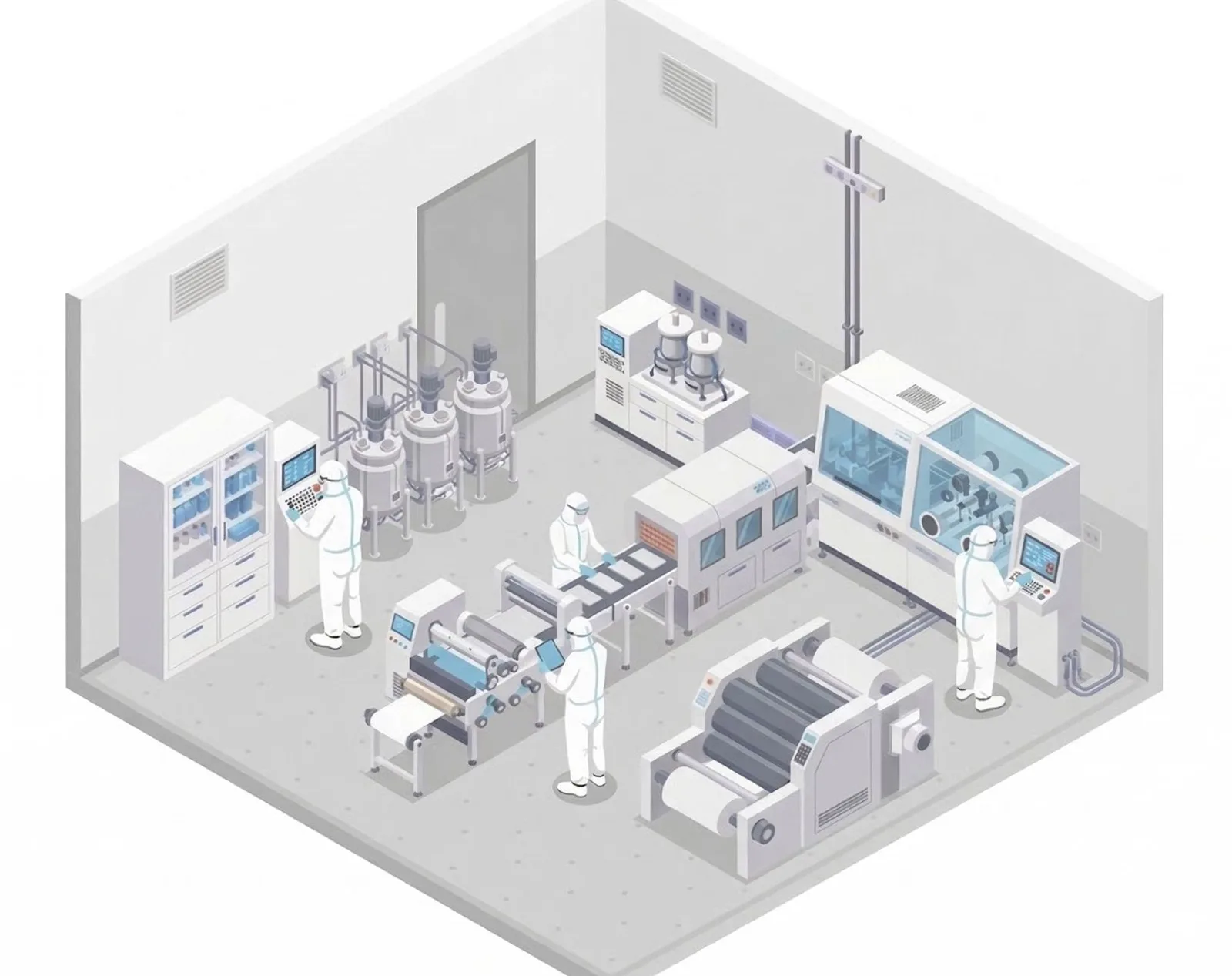
Particle excursions can occur between cleanroom classifications, during production, maintenance or operator interventions. TERA Sensor provides ISO 21501-4-calibrated particle counters and distributed monitoring solutions to improve contamination visibility across cleanrooms, equipment and air-handling systems.

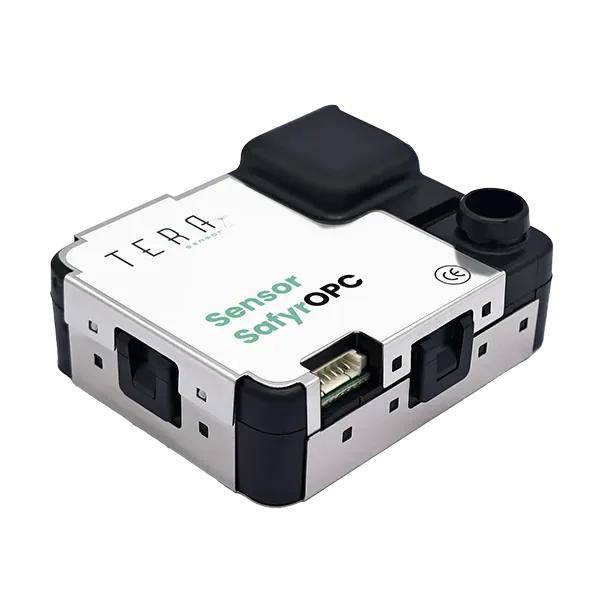
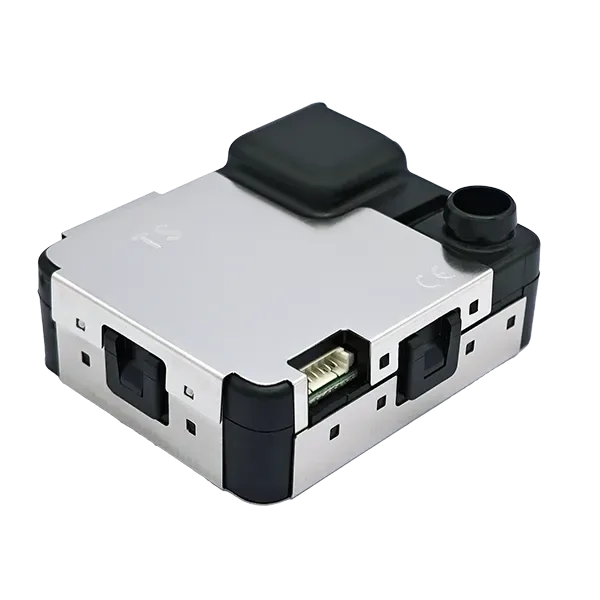
Calibrated optical particle-counting module for integration into machines, equipment and cleanroom-monitoring systems.
Explore Sensor SafyrOPC
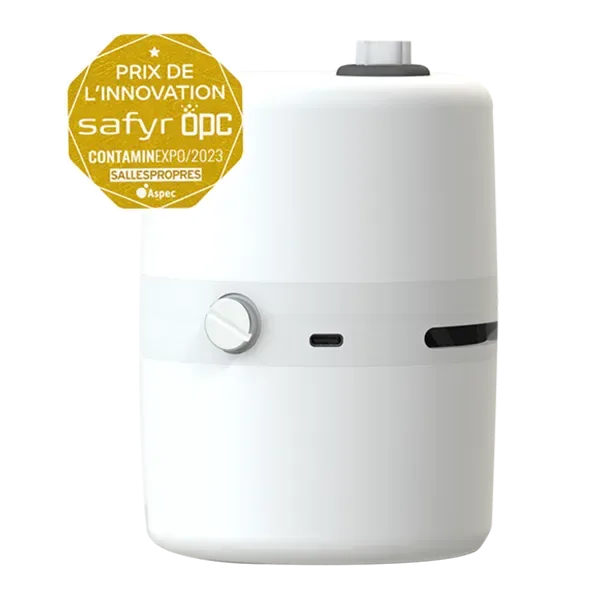
Compact, autonomous particle-monitoring point for continuous monitoring across controlled environments.
Explore SafyrOPC
Compact PM sensor for peripheral and technical areas around the cleanroom.
Explore NextPM
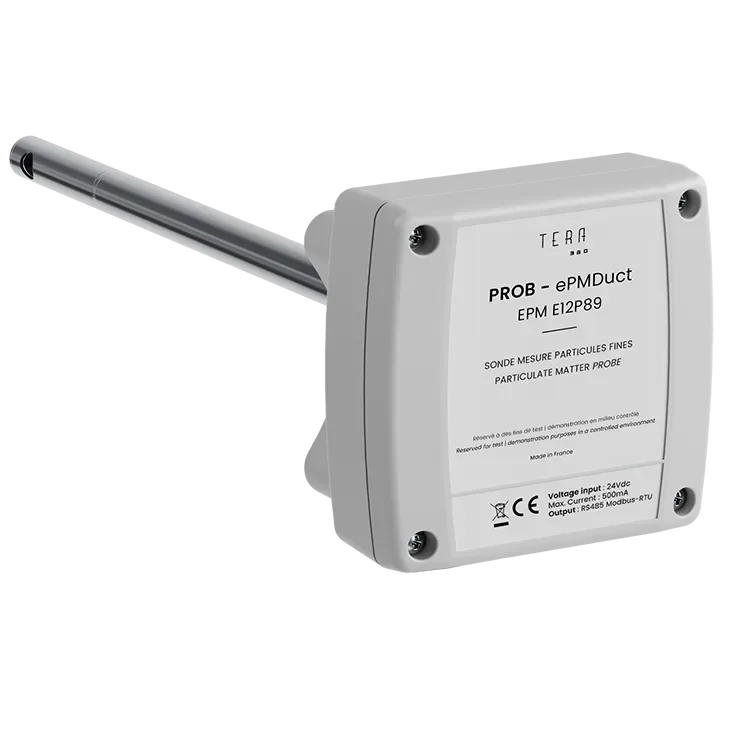
In-duct PM monitoring for detecting changing particle conditions before supply air enters controlled areas.
Explore PMDuct
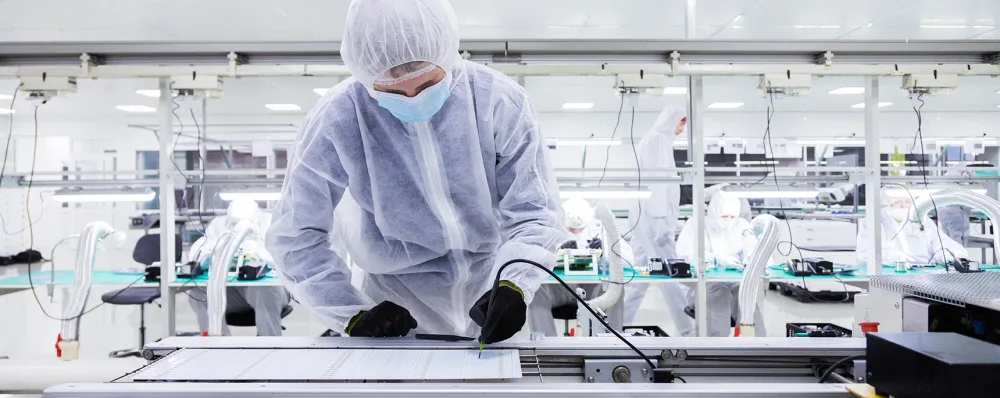
Cleanroom classification provides essential evidence that a controlled environment meets its specified particle class. However, contamination conditions can change during production as operators, equipment, materials and HVAC systems interact.
Short excursions may occur between periodic measurements or outside the limited number of routinely monitored locations. When contamination is detected late, identifying the affected process, location and time period can require lengthy investigations.
Increasing the number of continuous monitoring points can improve visibility, but conventional remote counters and centralized manifold systems may involve significant infrastructure, tubing, maintenance and integration costs.
Short particle excursions caused by operations, interventions or equipment may occur between periodic measurements.
When an excursion is identified after particles have propagated, product impact and the affected production period become harder to determine.
Limited spatial coverage makes it difficult to distinguish between personnel, equipment, airflow and process-related sources.
The cost and infrastructure required by conventional systems can limit the number of continuously monitored points.
At very low particle concentrations, the quality of the result depends not only on the optical counter but also on sample volume, location, airflow, tubing, calibration and data handling.
In clean environments, false counts, counting efficiency and the instrument detection limit can materially affect the interpretation of low particle concentrations. ISO 21501-4 calibration is what makes those characteristics traceable.
A higher flow samples a larger air volume in a given time, while a lower flow can provide more compact and cost-effective monitoring. The appropriate flow depends on the cleanroom class, particle limit, monitoring objective and required response time.
A particle counter only measures the air entering its inlet. Locations must therefore be selected according to airflow patterns, critical operations, equipment interfaces and risk to the product.
Remote sampling tubes can delay detection and lose larger particles through settling, bends and impaction. Long or complex tubing networks therefore require specific assessment and validation.
A manifold connected to multiple sampling locations measures each point sequentially. Short excursions may occur while the system is sampling another location.
Cleanroom monitoring requires traceable calibration, alarm management and documented data continuity. Removing a complete counter for calibration can temporarily reduce monitoring coverage.
Effective cleanroom monitoring therefore requires the right balance between metrological performance, sampling architecture, spatial coverage and operating cost.
SOLUTION ARCHITECTURE
Relying on a small number of high-cost particle counters limits the number of locations that can be monitored continuously. It can also leave the origin and propagation path of a contamination event partially invisible.
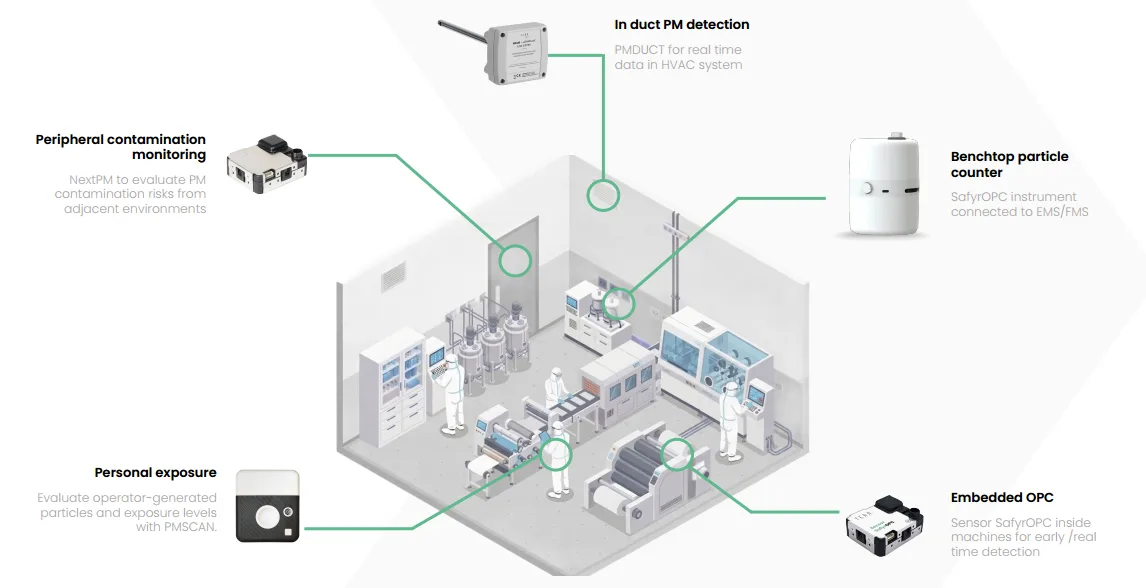
TERA Sensor combines complementary monitoring technologies across the contamination path, from adjacent environments and HVAC supply air through to the cleanroom and the critical process itself. Each product is deployed where its measurement principle provides the most relevant information.
This layered architecture helps collect the right particle data at the right location and detect abnormal conditions before they develop into a critical process event.
NextPM monitors changing particle loads in adjacent spaces, technical areas and other non-classification locations around the cleanroom.
PMDuct detects changing particle conditions inside supply ducts before the air reaches the controlled environment.
SafyrOPC Instrument provides continuous ISO 21501-4-calibrated particle counting at selected cleanroom monitoring locations.
Sensor SafyrOPC integrates ISO 21501-4-calibrated particle counting directly into machines, equipment and local monitoring systems.
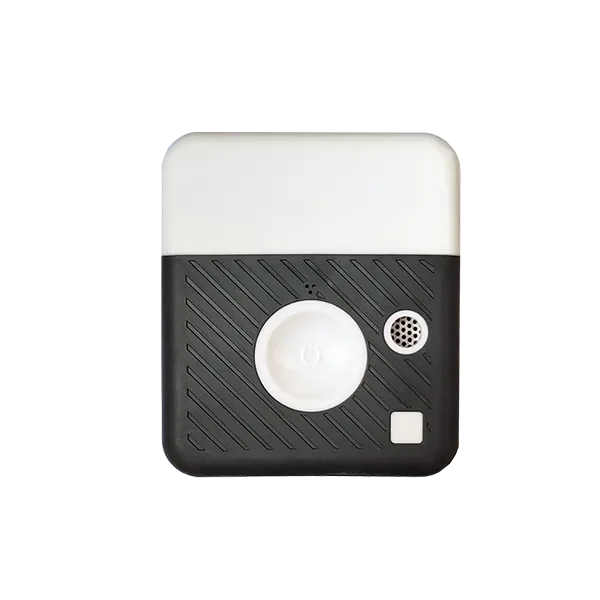
PMScan helps investigate transient particle events associated with operator movements, maintenance or specific operations.
Monitor particle conditions upstream and around the cleanroom before an event reaches the critical process.
Use PM monitoring for peripheral and HVAC trending, and ISO 21501-4-calibrated counting where cleanroom metrology is required.
Deploy more relevant monitoring points without using the most expensive particle-counting architecture at every location.
Compare data across adjacent areas, HVAC supply, cleanroom locations and equipment to determine where an abnormal particle event first appeared.
One measurement technology does not need to do everything. By combining complementary sensors across the contamination path, TERA Sensor helps collect the right particle information at the point where it is most useful.
Specifications, communication and calibration for each monitoring technology in the architecture above.
Compact PM sensor for peripheral and technical areas around the cleanroom, where a trend in particle conditions matters more than a calibrated count.
In-duct monitoring for detecting changing particle conditions in the HVAC supply path before air enters controlled areas.
Compact standalone monitoring point designed to extend ISO 21501-4-calibrated particle coverage across cleanrooms and controlled areas.
ISO 21501-4-calibrated optical particle counter for integration into process equipment, isolators and controlled-environment devices.
NextPM and PMDuct report PM trend data. SafyrOPC Instrument and Sensor SafyrOPC provide ISO 21501-4-calibrated particle counting. No single product on this page determines cleanroom classification or compliance on its own.
Distributed particle monitoring adds time and location context to cleanroom data, helping teams investigate excursions and assess contamination-control measures between periodic classifications.
A single classification result confirms that a location met its class at the moment it was sampled; it says nothing about what happened an hour, a shift or a cleaning cycle later. Continuous data fills that gap — showing how conditions evolved before and after an event, which locations were involved, how long an excursion lasted, and whether a corrective action actually brought particle levels back to baseline.
Capture short particle events that may not be visible during periodic sampling.
Add monitoring points near equipment, transitions and other locations identified by the monitoring plan.
Relate an excursion to a specific location, time period, operation or intervention.
Build a continuous record of particle conditions to support trending, review and investigation.
Monitor selected points simultaneously instead of waiting for a sequential manifold cycle.
Replace a calibrated sensing module without removing the complete monitoring station from service.
Compare particle conditions before and after cleaning, maintenance, airflow or process changes.
Continuous particle monitoring complements cleanroom classification, qualification and microbiological monitoring. The applicable sampling strategy must be defined and validated according to the cleanroom class, process risk and regulatory framework.
Monitoring performance depends on sensor selection, sampling locations, airflow, tubing, communication, calibration management, alarm logic and integration with the facility data systems.
TERA Sensor can support monitoring architecture, sensor integration, sampling design and calibration strategy. TERA Tronics can support electronics, connectivity, prototyping, industrialization and series manufacturing.
Classification establishes that a controlled environment met its specified particle class at a given moment, following a defined sampling plan. Continuous monitoring observes what happens between those classifications and closer to the process, during production, maintenance or operator interventions. The two are complementary: monitoring does not replace classification, and classification does not reveal transient excursions.
ISO 21501-4 specifies how a light-scattering airborne particle counter is calibrated and verified: counting efficiency, size accuracy and resolution, sampling flow rate, false counts and related metrological performance. SafyrOPC is factory-calibrated to this standard and supplied with an individual certificate, which is what makes its counts traceable.
SafyrOPC provides ISO 21501-4-calibrated particle-count data that can support cleanroom classification and monitoring strategies, subject to the applicable sampling plan and validation requirements. Classification itself depends on the number of sampling locations, the sample volume per location and the statistical treatment defined by the standard, not on the counter alone.
SafyrOPC can support risk-based continuous monitoring strategies in ISO 5-8 cleanrooms and GMP Grades B, C and D, subject to the facility contamination-control strategy, sampling plan and validation requirements. Its role in a given installation has to be defined by that strategy.
No. For Grade A, Annex 1 requires continuous monitoring of ≥0.5 µm and ≥5 µm particles throughout the duration of critical operations, with a sample flow rate of at least 28 litres per minute. SafyrOPC samples at 2.83 L/min and is not positioned as the primary Grade A monitoring system. It is intended for Grades B, C and D and for extending coverage elsewhere in the facility.
Sensor SafyrOPC is the calibrated counting module, intended for integration into equipment, isolators, tools or a customer monitoring system. The SafyrOPC instrument packages that same module into a standalone monitoring point with its own enclosure, power, communication and mounting, ready to be deployed in a controlled area.
A higher flow samples a larger volume of air in a given time, which matters when the particle limit is low and few particles are expected. A lower flow allows a more compact and less costly monitoring point. The appropriate flow depends on the cleanroom class, the particle limit, the monitoring objective and the response time required — it is a design decision, not a universal ranking.
A particle counter only measures the air entering its inlet. Locations should therefore be selected according to airflow patterns, critical operations, equipment interfaces and risk to the product, and monitoring should take place during operations. Regulatory guidance is explicit that measurement should occur at the locations posing the most risk to exposed product.
A manifold connected to several sampling locations measures them sequentially. While the system samples one location, the others are not being measured, so a short excursion elsewhere can pass unrecorded. The size of that gap depends on the number of points and the cycle time of the specific configuration.
Remote sampling tubes delay detection and lose particles through settling, bends and impaction, and the loss is most pronounced for larger particles. ISO 14644-21 identifies tubing longer than about one metre as requiring assessment. Shortening the sampling path — by placing the counter close to the point — reduces that dependency.
The calibrated sensing module can be replaced on site, so a monitoring point returns to service with a freshly calibrated module instead of waiting for the complete instrument to come back from the laboratory.
Yes. Sensor SafyrOPC communicates over UART and Modbus, and the instrument offers wired and wireless options, so monitoring points can feed the facility data architecture alongside the parameters already collected.
PMDuct monitors the HVAC supply path, upstream of the controlled area, and can reveal changing particle conditions before the air reaches the room. It measures PM mass fractions and is not an ISO 21501-4 cleanroom particle counter: it complements room counters rather than contributing to classification.