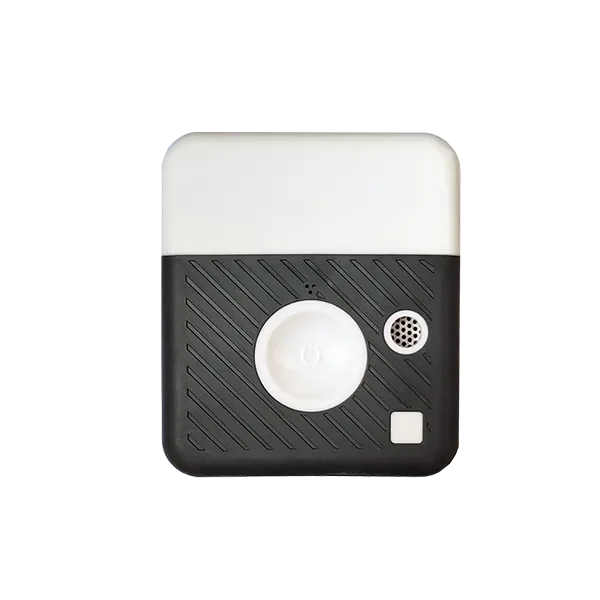
PMSCAN

Portable particulate matter monitor for mobile and field measurements

PORTABLE PM MONITOR

PMSCAN is a portable particulate matter monitor based on NextPM sensing technology.

It measures PM1, PM2.5 and PM10 together with temperature and relative humidity, and records time-resolved measurements locally for mobile studies, field investigations and personal monitoring applications.

Bluetooth communication and local datalogging allow measurements to be collected without requiring permanent network infrastructure.

  • PM1 / PM2.5 / PM10
  • Bluetooth communication
  • Local datalogging
  • Up to 15 h battery operation
Technical documentation User guide, Windows software, 3D STEP files, firmware history…
Buy single units

For one to five units, no quotation needed: card payment, invoice and shipping within 48 h from our distributors.

PORTABLE MEASUREMENT

NextPM sensing technology in a portable format

PMSCAN integrates NextPM into a battery-powered portable instrument designed to record particle concentrations while moving between locations or following activities over time.

NextPM optical sensing

PM1, PM2.5 and PM10 measurement using the same dual-angle optical architecture as NextPM.

Humidity management

Active humidity management reduces the influence of hygroscopic particle growth before optical measurement.

Time-resolved measurements

Local datalogging records changes in particle concentration over time.

Portable operation

Battery-powered operation and Bluetooth communication support mobile measurements and field investigations.

Time-resolved monitoring and occupational exposure assessment answer different questions

PMSCAN can provide continuous information on when and where particle concentrations change during a work activity.

Regulatory occupational-exposure assessment may require specific sampling conventions, reference methods and averaging periods. PMSCAN should therefore be used as a complementary tool where those requirements apply.

Technical specifications

Main measurement, communication, storage and power specifications.

Designation Values
GENERAL
Measured parameters PM1/PM2.5/PM10 in µg/m3Temperature in °CRelative Humidity in %Battery Level
PERFORMANCE
PM Concentration Range 0 - 1000 µg/m3
Particle Size detection range 0.3 µm to 10µm
PM Repeatability < 3%
COMMUNICATION
Type Low consumption radio communication
Measure/ Transmission Frequency From 1 second up to 5 minutes
Communication Options Moving Average 10 - 60 - 900 sec
ENERGY
Power USB C5 V (+/- 10%) - 1A. Do not apply voltage over 13V at the risk of destroying the sensor
Battery life Normal Mode 15 hours
Eco Mode > 20 hours
MEMORY
Internal memory Data acquisition 6145 points (total duration depending on frequency)
DIMENSIONS / WEIGHT
H 88 mm x W 76 mm x D 36 mm | 210 g
TECHNICAL RESOURCES

Resources for using PMSCAN

User and data-access documentation is available for field deployment and measurement studies.

View technical resources

SENSING PERFORMANCE

Based on documented NextPM sensing technology

PMSCAN uses the NextPM sensing platform. Technical and independent performance information for the underlying particulate-matter measurement is available through the NextPM documentation.

NextPM evaluations

  • AQ-SPEC evaluation
  • Laboratory and field studies
  • Scientific publications
View NextPM performance data

Calibration options

PMSCAN configurations can use the appropriate NextPM calibration level according to the intended application.

View calibration options

Technical documentation

  • Measurement range
  • Particle-size information
  • Bluetooth
  • Datalogging
  • Battery
View PMSCAN specifications

What portable time-resolved monitoring adds

baseline activity particle peak movement / task change concentration decrease Particle concentration Time
Illustrative example

Identify short events

Observe particle peaks that may disappear in longer averaging periods.

Compare locations

Measure particle conditions across different areas using the same instrument.

Compare activities

Relate concentration changes to tasks, operations or interventions.

Support investigations

Add time-resolved particle information to occupational, process or environmental investigations.

ENGINEERING SUPPORT

Planning a mobile PM study or portable monitoring device?

Measurement protocol, sensor positioning, acquisition interval, data handling and calibration strategy can all influence how portable PM measurements are interpreted.

TERA Sensor can support measurement architecture and sensing integration; TERA Tronics can extend the project when custom electronics, firmware, enclosure or product development is required.

Measurement need
Measurement architecture TERA Sensor
Sensing integration TERA Sensor
Custom hardware TERA Sensor + TERA Tronics
Product development TERA Tronics

FAQ

PMSCAN measures PM1, PM2.5 and PM10 mass concentrations together with temperature and relative humidity, based on NextPM sensing technology.

NextPM is the OEM optical sensing element. PMSCAN is a complete portable instrument built around NextPM, with its own enclosure, battery, Bluetooth communication and local datalogging for mobile and field measurements.

Yes. PMSCAN logs measurements locally in internal memory and can also transmit data over Bluetooth, so it does not require a permanent network connection to record data.

PMSCAN operates for approximately 15 hours in normal mode and more than 20 hours in eco mode, on a single charge.

Data can be retrieved over Bluetooth or downloaded from the internal memory, which stores up to 6,145 data points depending on the selected measurement interval.

Yes. Its portable, battery-powered design and time-resolved measurements make PMSCAN suitable for moving between locations and mapping spatial variations in particle concentration.

PMSCAN can support occupational-hygiene investigations by providing complementary time-resolved particle information. Regulatory occupational-exposure assessment can require specific reference methods, sampling conventions and averaging periods that PMSCAN alone does not replace.

PMSCAN's active humidity management, inherited from NextPM, reduces the influence of hygroscopic particle growth before optical measurement, though aerosol composition and environmental conditions remain part of data interpretation.